Carbon Monoxide and Boilers
Carbon monoxide from a gas or oil boiler is invisible and odorless, so the defense is a yearly professional inspection plus working CO alarms, and an alarm always means everyone outside first, then 911.
Compiled by the Wet Return bench from makers' manuals and federal pages · how pages are checked · Checked again
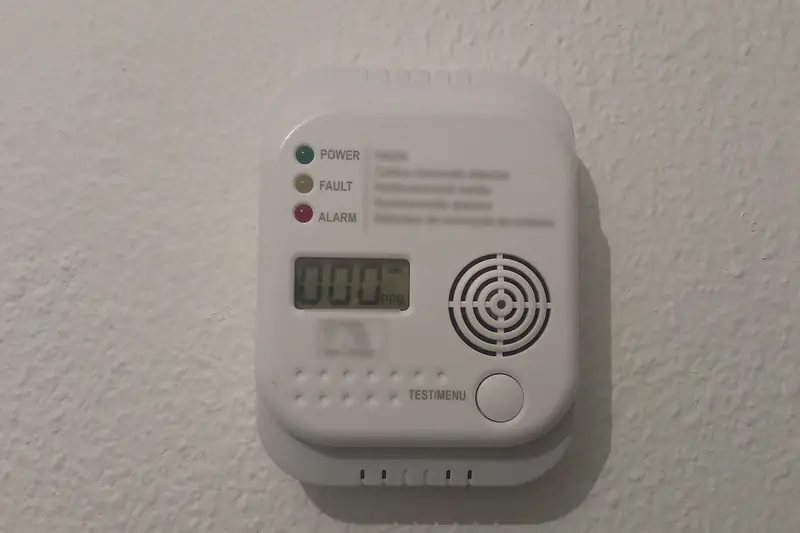
On the tag
- The CDC calls carbon monoxide "an odorless, colorless gas that kills without warning" and names gas- and oil-burning furnaces among household sources.
- More than 400 Americans die each year from unintentional CO poisoning not linked to fires, according to the CDC (read October 2026).
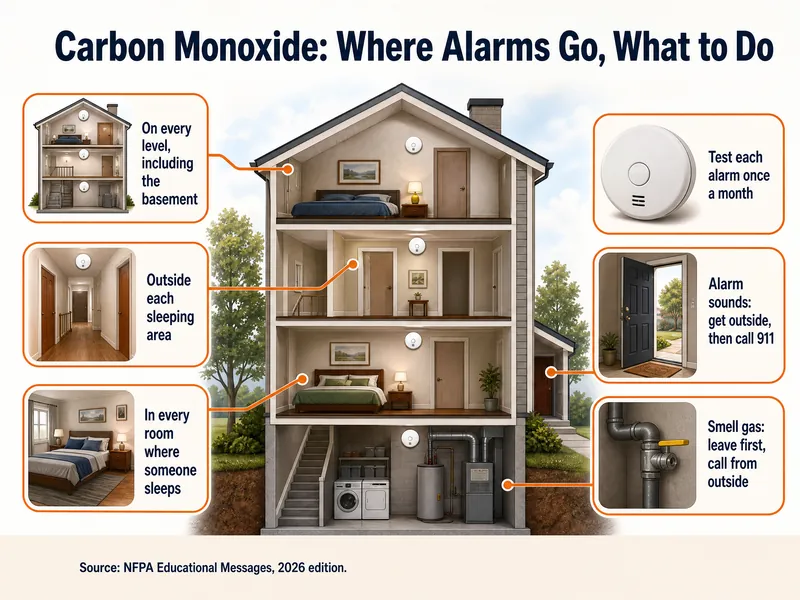
- NFPA's 2026 wording: CO alarms in every room where a person sleeps, outside each separate sleeping area, and on every level of the home, basement included.
- If a CO alarm sounds: everyone goes outside to fresh air first, then calls 911 from outside (NFPA, CPSC).
- The EPA lists worn or poorly maintained boilers and blocked or disconnected flues as CO sources.
- Weil-McLain's 2025 user manual says the installer must confirm at least one CO alarm is in the living space before a gas boiler is started.
How can a boiler leak carbon monoxide?
A boiler leaks carbon monoxide when fuel burns poorly or when the flue gases fail to leave the house. The EPA's indoor air page (updated July 2026, read October 2026) names "worn or poorly adjusted and maintained combustion devices (e.g., boilers, furnaces)" and a flue that is "improperly sized, blocked or disconnected" among the sources, along with back-drafting from furnaces and gas water heaters.
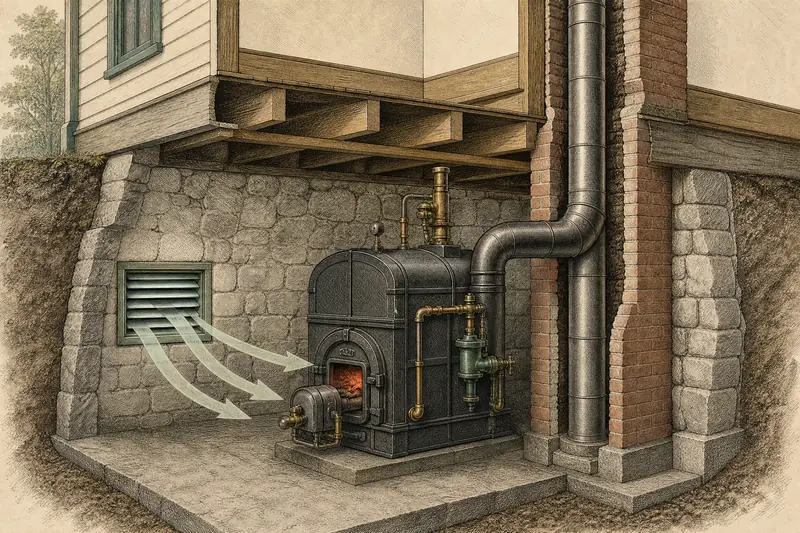
The danger is flue gas that spills into the basement instead of rising up the chimney or out a vent pipe. Weil-McLain's manuals warn that flue gas spillage brings carbon monoxide emissions that can cause severe injury or death, and they require a technician to inspect the chimney and vent before a boiler goes in. Most of these faults cannot be seen from the living room.
That is why the EPA, quoting the CPSC, the federal consumer product safety agency, urges a yearly professional inspection of all fuel-burning appliances. The CDC adds a yearly chimney check. Both are covered on the annual boiler service page and the chimney liner page.
Where should carbon monoxide alarms go?
Carbon monoxide alarms belong in every room where a person sleeps, outside each separate sleeping area, and on every level of the home including the basement. That is the wording in NFPA's Educational Messages Desk Reference, 2026 edition, section 3.4. It covers the shorter CPSC and U.S. Fire Administration advice and adds the basement, which is where most radiator-home boilers sit.
NFPA also says alarms that are interconnected throughout the home give the best protection, so one alarm sounding sets off the rest. Mount each one where its maker's instructions say; the same NFPA section defers to the manufacturer on placement and mounting height.
Boiler makers expect alarms too. Weil-McLain's 2025 gas boiler user manual states that the installer must confirm at least one CO alarm is in the living space before the boiler is put into operation.
| Source | Where alarms go | Upkeep |
|---|---|---|
| NFPA Desk Reference, 2026 edition | Every room where a person sleeps, outside each sleeping area, every level including the basement | Test at least once a month; replace per maker or at the end-of-life signal |
| CPSC Carbon Monoxide Information Center | Every level of the home and outside sleeping areas; interconnected is best | Battery-operated or with battery backup |
| CDC CO Poisoning Basics | Not detailed on the page | Replace per the maker's instructions or every 5 years |
Owners can keep alarms working: test each one monthly with its button, as NFPA asks, and replace batteries when the alarm chirps for them. Replace the whole alarm when its end-of-life signal sounds or when the maker's date says so.
What are the symptoms of carbon monoxide poisoning?
The most common symptoms are headache, dizziness, weakness, upset stomach, vomiting, chest pain and confusion, and the CDC notes they are often described as "flu-like". The CPSC's list adds nausea and sleepiness.
Two patterns matter in a house with a boiler. The EPA describes flu-like symptoms that clear up after leaving home, which points at something inside the house. And the CDC warns that people who are asleep can die from CO before they ever feel symptoms, which is why alarms near bedrooms matter more than any symptom list.
If several people, or people and pets, feel ill at the same time during the heating season, treat it as possible CO. Get everyone into fresh air, then call 911 from outside; do not wait to see whether it passes.
What should you do when a carbon monoxide alarm sounds?
When a carbon monoxide alarm sounds, get everyone outside to fresh air immediately, then call 911 from outside. NFPA's 2026 desk reference puts it in that order and adds: stay outside until emergency personnel say it is safe to go back in. The CPSC's March 2026 winter safety release says the same: never ignore an alarm.
Do not stop to open windows, look for the source, or switch the boiler off. Leaving comes first because the alarm cannot tell you how high the level is. Once responders have cleared the house, a licensed heating technician should find out why the boiler or its venting let CO in before the heat goes back on.
Carbon monoxide by the numbers
- 400+Americans who die each year from unintentional CO poisoning not linked to firesCDC
- 1CO alarm the installer must confirm in the living space before a gas boiler startsWeil-McLain user manual, 2025
- MonthlyHow often NFPA says to test each CO alarmNFPA Desk Reference, 2026
- 5 yearsReplacement interval the CDC gives as an alternative to the maker's dateCDC
What boiler warning signs point to carbon monoxide?
The clearest warning signs are a skipped yearly inspection, a vent pipe that is rusted, sagging or pulled apart, and outdoor vents buried in snow. None of them proves CO is present, but each is on a federal or maker list of causes, and each is something an owner can notice without touching the boiler.
Weil-McLain's owner checks ask you to look at the vent piping for damage and to keep combustion and ventilation air openings unblocked. The CPSC's winter release asks owners to clear snow away from the outside vents of fuel-burning appliances. On a sidewall-vented condensing boiler, that means the intake and exhaust pipes on the outside wall.
Other causes belong to the technician to judge, such as a gas water heater on a shared chimney that back-drafts, which the EPA lists as a CO source. The combustion air page explains why a sealed-up boiler room can starve a burner. If you are unsure about anything you see near the boiler, call a licensed heating technician rather than opening panels.
What should you do if you smell gas?
If you smell gas, leave the house right away, and only once you are outside and away from the building call 911 or your gas utility. NFPA's desk reference (section 19.7) says not to operate lights, appliances or phones before leaving, and to stay out until the gas professional or emergency responders say it is safe.
Carbon monoxide has no smell at all (CDC), so a gas smell near the boiler is a separate emergency from a CO alarm, but the response is the same idea: leave first. Do not flip switches, light anything, or try to find the leak, and do not turn the gas supply back on yourself once it has been shut off (NFPA).
After the utility or fire department has made the house safe, a licensed heating contractor repairs the leak and restarts the boiler. The boilers section links the rest of the safety pages, and the replacement page covers the venting retest that follows a new boiler.
Proof stamp: where these figures come from
This page is based on the CDC's "Carbon Monoxide (CO) Poisoning Basics", the EPA's page on carbon monoxide and indoor air (updated July 2026), the CPSC's Carbon Monoxide Information Center and its March 16, 2026 winter release, NFPA's Educational Messages Desk Reference (2026 edition), the U.S. Fire Administration's CO page, and Weil-McLain's gas boiler user manual (2025), all read October 2026. Only one death figure is used (CDC), because CDC, CPSC and USFA count different scopes. Left out: alarm ppm thresholds, which no source read here states for homes, and any step that involves opening, testing or adjusting the boiler.
Questions from the boiler room
Does an electric boiler make carbon monoxide?
No. Carbon monoxide comes from burning fuel, and an electric boiler burns none. A house with an electric boiler can still have CO from a gas water heater, a gas range, a fireplace or an attached garage, so the NFPA alarm placement still applies.
Can a boiler leak CO when it is turned off?
A boiler that is not firing makes no new CO. The risk returns the moment the burner lights, and other appliances on the same chimney, such as a gas water heater, can still spill while the boiler is idle.
Does the boiler maker require a CO alarm?
Weil-McLain's 2025 gas boiler user manual does: the installer must confirm at least one carbon monoxide alarm is installed in the living space before the boiler is put into operation. A new boiler is a good moment to add alarms on every level as NFPA describes.
Does the basement need its own CO alarm?
Yes. NFPA's 2026 wording names every level of the home, including the basement, and most radiator-home boilers sit there. Exact mounting height and spot follow the alarm maker's instructions, which NFPA defers to.
How do you know when a CO alarm is worn out?
NFPA says to replace a CO alarm when its end-of-life signal sounds or when the maker's instructions say to. The CDC gives every 5 years as the alternative. Writing the install date on the case makes the date easy to track.
Should a CO alarm sounding once and stopping be ignored?
No. The CPSC says never to ignore an alarm. Get everyone outside, call 911 from outside, and let responders check the house. Then have a licensed heating technician inspect the boiler and venting before relying on it again.
Can snow on an outside boiler vent cause carbon monoxide?
A blocked flue is on the EPA's list of CO causes, and snow can block the pipes of a sidewall-vented boiler. The CPSC's March 2026 winter release asks owners to clear snow away from the outside vents of fuel-burning appliances such as furnaces. Brush it away gently without moving the pipes.
More boiler safety
Back up the riser: the start page for radiator homes