Tag No. 3 · 6 pages
Boilers for Radiator Homes
Boilers for radiator homes come in two kinds, steam and hot water, and the one you have decides the replacement, the efficiency rules and the yearly service it needs.
Compiled by the Wet Return bench from makers' manuals and federal pages · how pages are checked · Checked again

On the tag
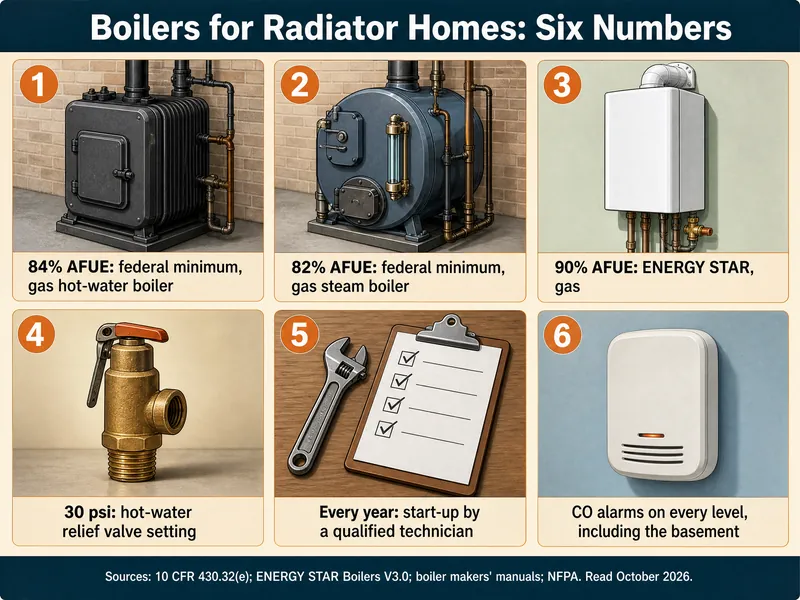
- Under 10 CFR 430.32(e) (eCFR, read October 2026), new gas boilers need 84% AFUE for hot water and 82% for steam.
- ENERGY STAR certifies gas boilers at 90% AFUE or higher and oil boilers at 87% or higher.
- Steam boilers are sized to the radiators they feed, not to a heat-loss figure (U.S. Boiler).
- Weil-McLain and Navien each make an every-year technician inspection part of owning their boilers.
- A boiler put in service during 2026 earns no federal 25C credit (IRS, read October 2026).
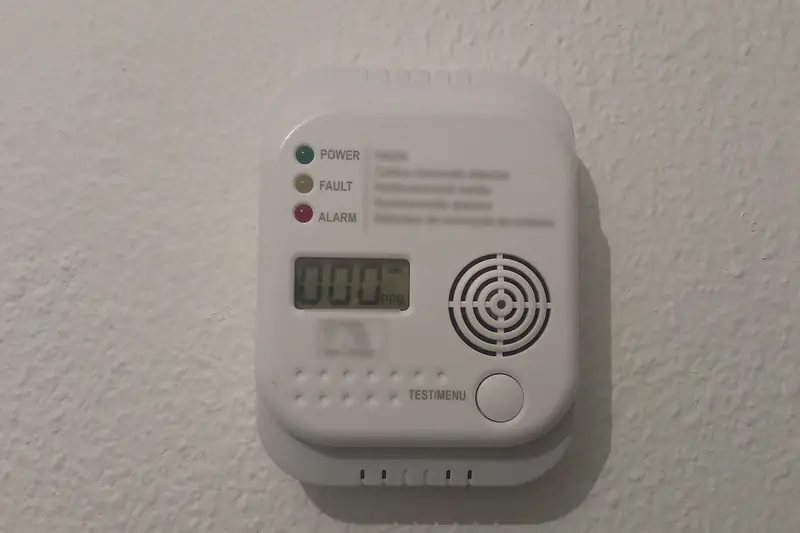
- NFPA (2026) puts a CO alarm in each sleeping room, outside each sleeping area, and on all levels, basement too.
Which boiler types heat radiator homes?
Two kinds do the work, steam boilers and hot-water boilers, and the federal boiler definition at 10 CFR 430.2 covers both: a gas, oil or electric appliance supplying low-pressure steam (15 psig or less) or hot water for space heating.
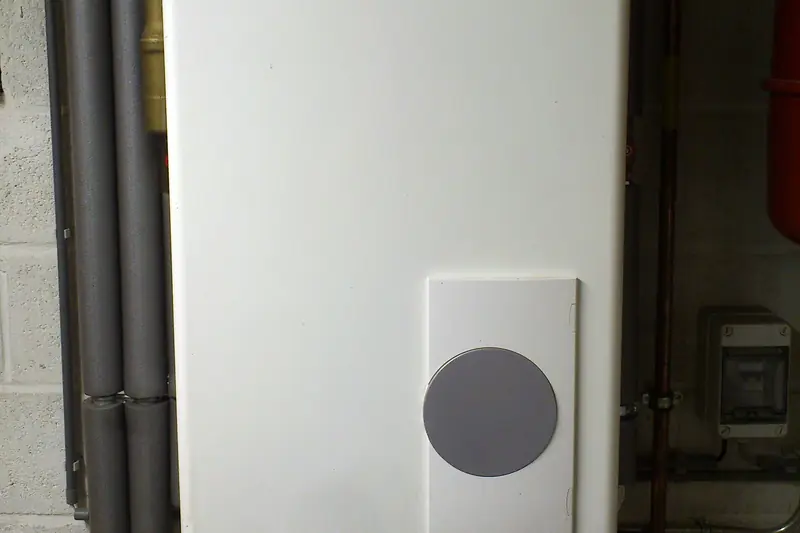
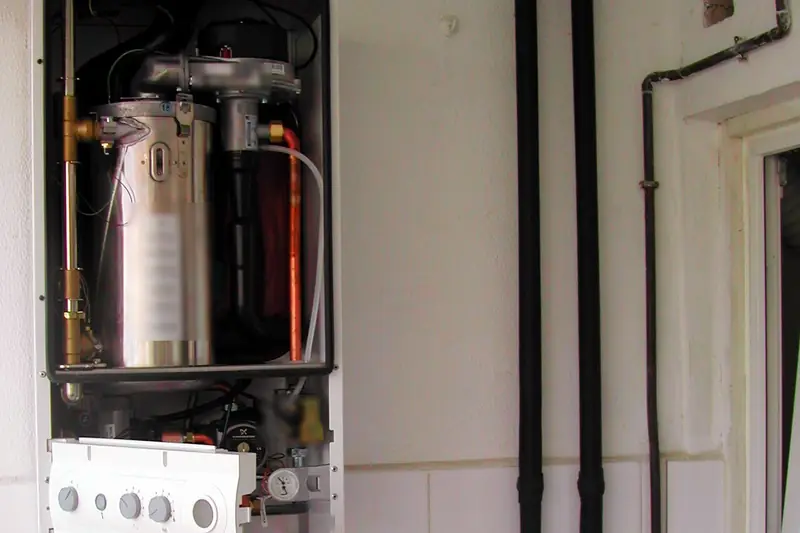
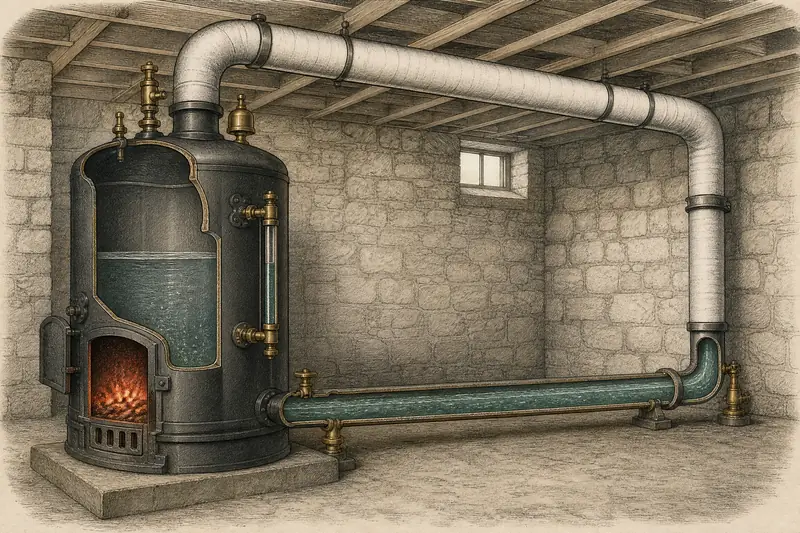
Steam boilers are floor-standing cast iron and keep a visible water line in a sight glass. Hot-water boilers range from cast-iron units to wall-hung condensing models, and a combi adds tap water. The steam section and the hot-water section explain the systems around them.
What does AFUE tell you about a boiler?
AFUE tells you the share of a year's fuel that becomes heat in the house; ENERGY STAR defines it as annual output over annual input, not counting electricity. In plain terms, a boiler rated 84% loses about 16% of a year's fuel energy.
Only hot-water boilers can condense, and only when cool water returns from the radiators. The DOE's Building America condensing boiler guideline (2014) warns that a poorly set-up condensing boiler does no better than a standard one.
| Boiler | Federal minimum, made since January 15, 2021 | ENERGY STAR | Can it condense? |
|---|---|---|---|
| Gas, hot water | 84% | 90% | Yes, with cool return water |
| Gas, steam | 82% | 90% | No |
| Oil, hot water | 86% | 87% | Yes, with cool return water |
| Oil, steam | 85% | 87% | No |
Is a combi boiler right for a radiator home?
A combi suits a hot-water radiator home whose hot-water use at any moment fits its rating; Navien's NCB-E line runs from 2.6 gpm on the smallest size to 4.5 gpm on the largest, with a 77°F temperature rise (installation manual, 2019). It cannot serve a steam system.
Hard water is the combi's weak point. Navien accepts up to 12 grains per gallon, while Weil-McLain wants water over 50 ppm hardness softened before it reaches its ECO Tec combi.
When should an old boiler be replaced?
Leaks, a constant need for fresh makeup water and breakdowns not worth fixing are the signals that an old boiler is due for replacement; Weil-McLain's 2025 user manual says continual makeup water cracks cast-iron sections over time.
Size comes from the radiators for steam and from heat loss for hot water. Money rules changed: the IRS's FAQ on the 2025 law (read October 2026) ends 25C for any boiler put in service after 2025, and the DOE's Home Energy Rebates are state-run and available only in select states.
What does a yearly boiler service cover?
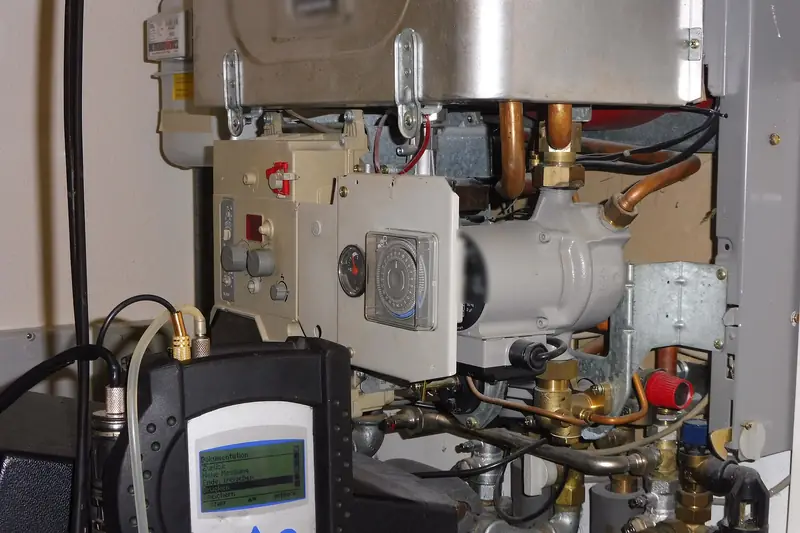
A yearly boiler service covers the burner and flame, the flue and vent, pressures, the relief valve, cutoffs and limit controls, and the water, as listed in Weil-McLain's CGa manual (2019). Steam boilers add the low-water cutoff, vents and traps; hot-water boilers add the expansion tank and air removal.
Expect roughly 12 psi with the water cold and less than about 24 psi hot, by Weil-McLain's numbers; the relief valve opens at 30. Readings creeping up to that mark, or water dripping from the relief valve, are a technician call.
Boiler numbers worth knowing
- 84%Lowest AFUE allowed on a new gas boiler for hot watereCFR, 10 CFR 430.32(e)
- 90%AFUE floor for an ENERGY STAR gas boilerENERGY STAR product page
- 30 psiWhere a home hot-water boiler's relief valve opensWeil-McLain, ECO Tec Series 2 (2024)
- 1 yearInterval for a technician's start-up and inspectionNavien NCB-E user manual, 2019
How do you keep a boiler room safe?
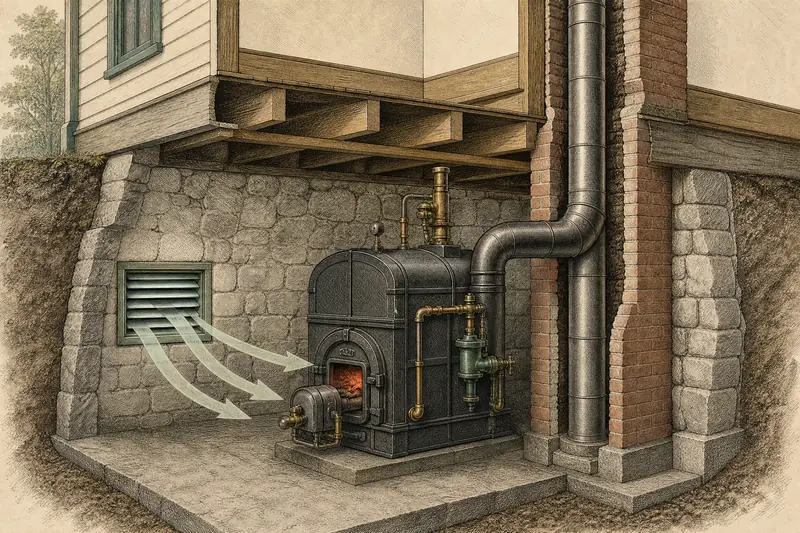
Keep a boiler room safe with working CO alarms, clear air openings, a sound chimney and a yearly inspection; the EPA lists poorly maintained boilers and blocked or disconnected flues as carbon monoxide sources.
Follow NFPA's 2026 placement: an alarm on each floor including the basement, outside every sleeping area, and inside each room someone sleeps in. If it sounds, leave the house before you dial 911. If you smell gas, get out without touching switches or phones and call 911 or the gas utility from outside. Owners can keep louvers and grilles near the boiler unblocked; anything more, such as a rusted vent pipe, is a job for a licensed heating technician.
Proof stamp: where these figures come from
This section is based on 10 CFR 430.2 and 430.32 (eCFR), ENERGY STAR's boiler criteria, the DOE Building America condensing boiler guideline (2014), Weil-McLain's CGa (2019), ECO Tec (2024) and user (2025) manuals, Navien's NCB-E manuals (2019), U.S. Boiler's steam replacement tips, the IRS's questions-and-answers on the 2025 tax law, the DOE Home Energy Rebates page, the EPA's CO page and the 2026 NFPA desk reference; every source was read in October 2026. Each linked page lists its own sources. Left out: prices, brand rankings and any step that has an owner open or adjust a boiler.
Questions from the boiler room
How do you tell a steam boiler from a hot-water boiler?
A steam boiler has a glass tube showing the water level and a pressure-only gauge with a low range. On a hot-water boiler one dial shows both pressure and temperature, and an expansion tank is often close by. Weil-McLain's user manual names the two gauge types separately.
Do boilers for radiator homes need a chimney?
Many older boilers vent into a masonry chimney, which Weil-McLain prefers lined. Some newer boilers vent out through a wall, which can leave a water heater alone in the old flue and calls for an installer's retest under NFPA 54.
Is an electric boiler covered by the AFUE rules?
Electric boilers have no federal AFUE minimum in 10 CFR 430.32(e). They burn no fuel, so no flue gas or combustion air is involved.
Can one boiler heat radiators and make tap water?
Yes. A combi heats water on demand, and other boilers can feed a separate storage tank. A combi's tap-water flow is limited by its burner, so check the rating against the fixtures you run at once.
Are boiler rebates available in 2026?
Neither 25C nor 25D applies to work finished in 2026, per the IRS. The DOE's Home Energy Rebates are run by states and available in select states; ask your state energy office. HEEHR covers electric equipment, not gas or oil boilers.
Who should work on a boiler in a radiator home?
A licensed heating contractor, and for steam, a heating technician who works on steam. Owners can read gauges, look at the sight glass and keep the area clear; makers put the rest in a qualified technician's hands. If unsure about anything you see, call a licensed heating technician.
Back up the riser: every steam and hot-water page on Wet Return